Provenance
Methodology & sources
Where every number on this site comes from, how it is coded, and what it cannot tell you.
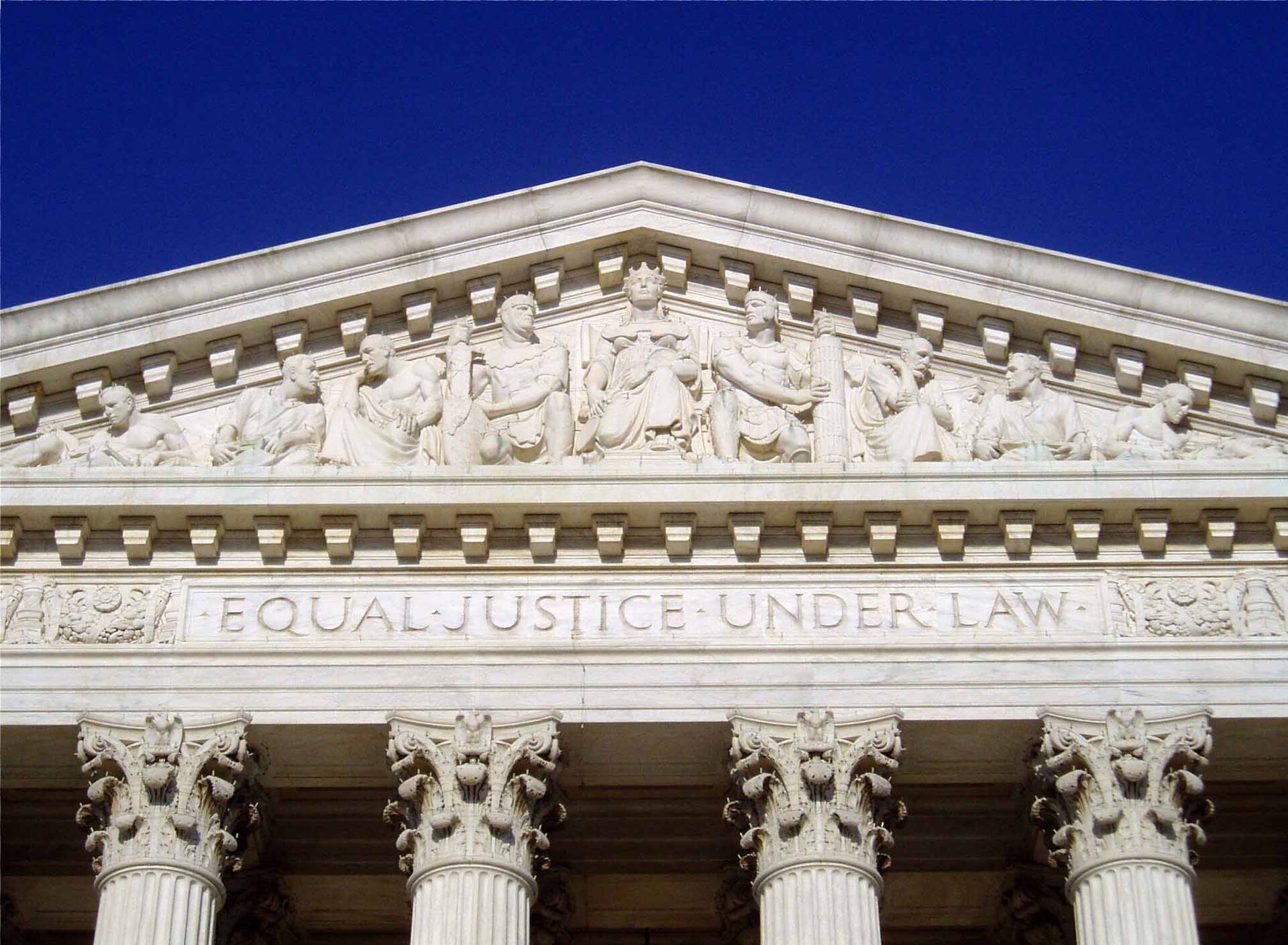
Photo: MattWade · CC BY-SA 3.0 · Wikimedia Commons · All photo credits
Primary data source
The Supreme Court Database (SCDB), version 2024 Release 01, is the core structured dataset — maintained by Harold J. Spaeth, Lee Epstein, and collaborators at Washington University in St. Louis. It covers all orally argued cases from the 1946 through 2023 terms. scdb.wustl.edu
Licence. SCDB is published under Creative Commons Attribution-NonCommercial 3.0 United States (CC BY-NC 3.0 US) — it is not public domain. The NonCommercial term and the attribution requirement travel with the data, including the copies published under /data/ on this site. Anyone reusing it must honour those terms and credit the Supreme Court Database.
Live sources
The “Court right now” section aggregates public data refreshed daily: legal-news RSS feeds (SCOTUSblog, Empirical SCOTUS, Courthouse News, ABA Journal and Volokh Conspiracy), recent Supreme Court opinions via CourtListener / the Free Law Project, judiciary bills and nominations via Congress.gov, and broad economic indicators via FRED. Every block links back to its source. See the data overview and DATA_SOURCES.md for why each source is relevant and how failures degrade gracefully.
Supplementary sources
- SupremeCourt.gov — docket lookup and official opinion PDFs.
- Free Law Project / CourtListener — bulk case data and opinion text.
- Justia — public opinion text and case summaries.
- Caselaw Access Project — Harvard Law Library's digitization of U.S. case law.
Field definitions
- Term
- The October Term year in which the case was decided.
- Issue area
- One of 14 SCDB categories such as Criminal Procedure or Civil Rights.
- Vote split
- The majority-minority vote count (e.g., 5-4), from majVotes and minVotes.
- Decision direction
- Coded conservative, liberal, or unspecifiable per SCDB conventions.
- Winning party
- Whether the petitioner or respondent prevailed, from partyWinning.
Limitations
- SCDB covers orally argued cases from 1946 onward; per curiam and pre-1946 cases are excluded.
- Issue-area and direction codes involve editorial judgment; reasonable scholars may disagree.
- Live feeds reflect their upstream sources at fetch time and may lag or omit items.
Independence
SCOTUS Decisions is an independent research and educational project operated by AXIA Enterprises. It is not a government website and is not affiliated with or endorsed by the U.S. Supreme Court, Congress, the Federal Reserve, or any agency. Photographs of federal buildings and portraits of justices are used under the licences listed on the credits page — some public domain, some Creative Commons, and not all of them United States government works; their appearance here implies no endorsement, and no federal, Supreme Court or agency seal appears anywhere on this site. Every image is listed with its credit, licence and source on the credits page.
How the site is built
Every page here is static HTML generated at build time from JSON in the repository — there is no runtime server and no analytics. A scheduled job re-fetches the live sources daily, rebuilds the site, and redeploys it. Case and vote data are also published as raw JSON under /data/, and the machine-readable site description lives at /llm-info.