Independent · not a government site
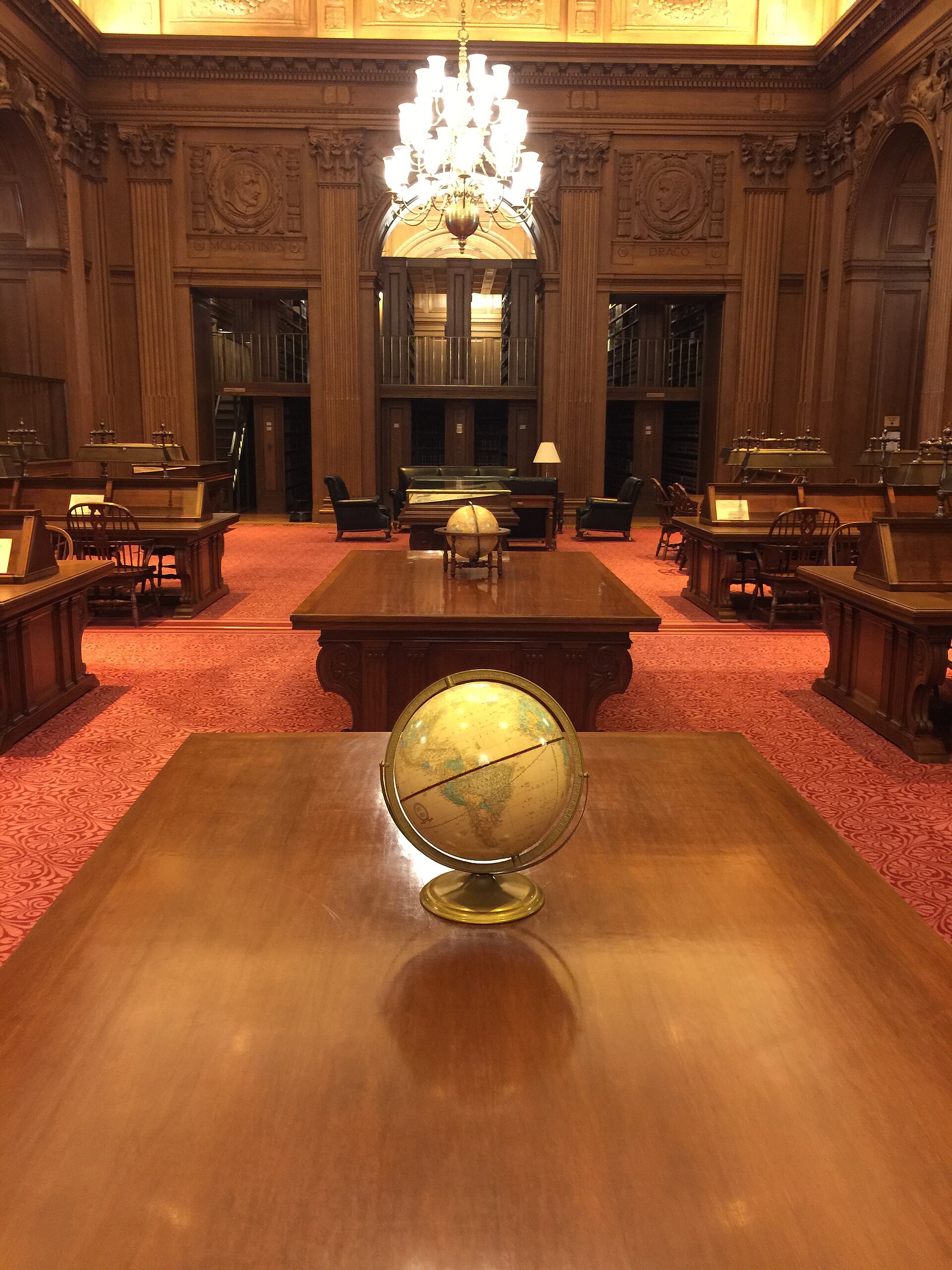
A reading room in the library of the Supreme Court of the United States, with a globe and reading tables beneath a carved and gilded ceiling.

Explainers

Understanding the data

Key concepts for interpreting Supreme Court decisions and vote data.

Photo: ProfessorUltimo · CC BY-SA 4.0 · Wikimedia Commons · All photo credits

Explainers

What is a 5-4 decision?

A 5-4 decision is the narrowest possible majority on a nine-member Court: five justices one way, four in dissent. These cases are often the most contentious and consequential. Since 1946, roughly 20% of decided cases have been 5-4 splits.

What is the Supreme Court Database?

The Supreme Court Database (SCDB), maintained at Washington University in St. Louis, is the most widely used academic dataset of Court decisions. It encodes every orally argued case since 1946 with over 200 variables. This site uses SCDB as its primary structured data source.

Issue areas & vote splits

SCDB classifies cases into 14 issue areas such as Criminal Procedure, Civil Rights, First Amendment, and Economic Activity. Vote splits (9-0, 7-2, 5-4) describe how many justices joined the majority versus the dissent.

Decision direction

SCDB codes each decision as "conservative," "liberal," or "unspecifiable" per conventional legal-political categories. These labels reflect scholarly coding conventions — not the justices’ self-identification — and are most useful for longitudinal trend analysis.

How current terms compare

The Roberts Court (2005–present) decides fewer cases per term than earlier eras — roughly 60–70, versus 130+ under the Burger Court — but a larger share involve closely divided votes.

Petitioner vs. respondent

The petitioner asks the Court to review a lower-court decision; the respondent defends it. Historically, petitioners win more often — the Court tends to grant review when it suspects error below.

Where to go next