Search
Case explorer
Every one of the 9,277 orally argued decisions from the 1946–2023 terms, filterable by term, issue area, chief-justice era, vote split, winner and direction — each with its own page.
The Supreme Court Database · 1946–2023
Search and filter Supreme Court decisions by term, issue area, chief-justice era, vote split, and outcome — now alongside a daily-refreshed pool of legal news, recent opinions, and judiciary activity.
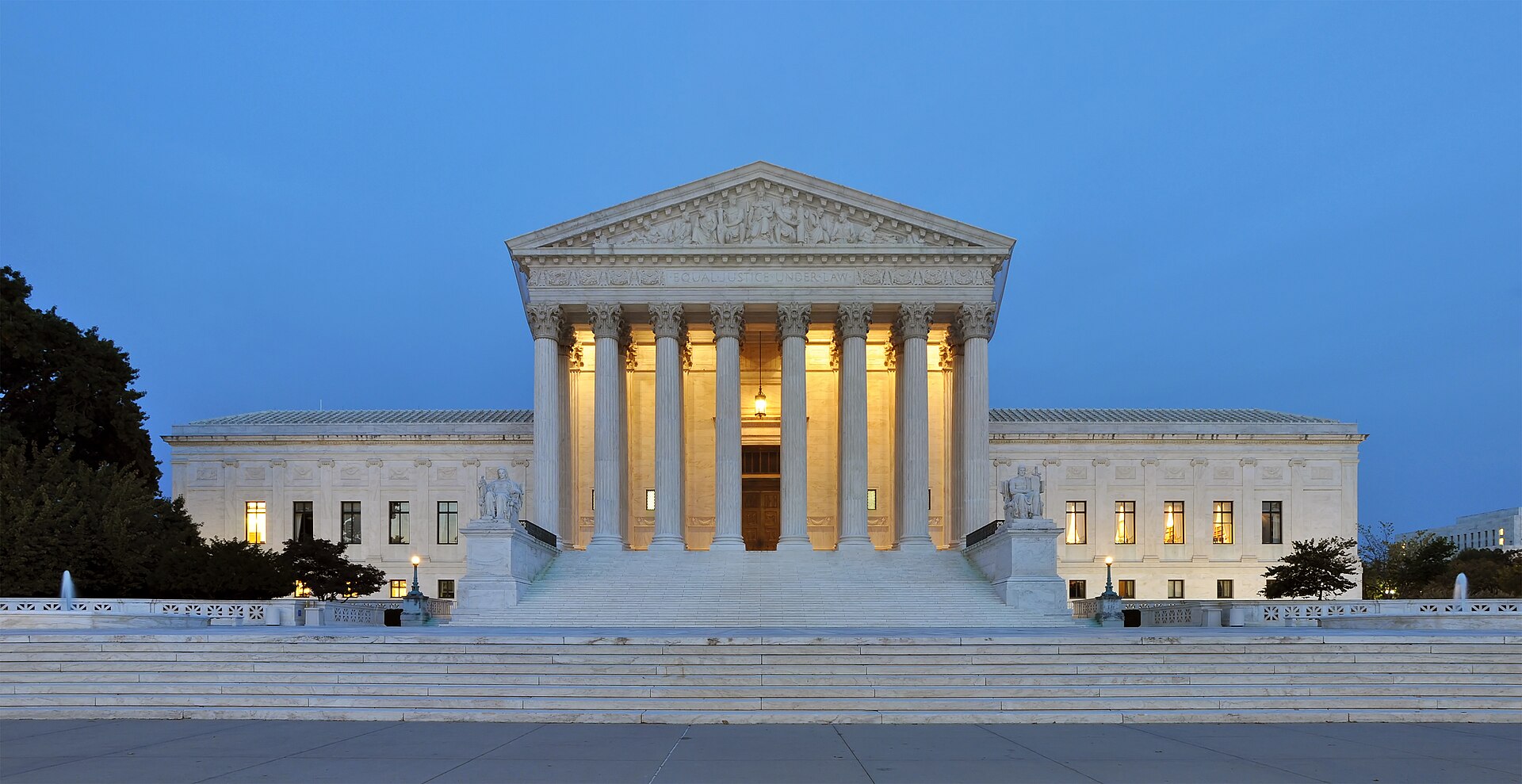
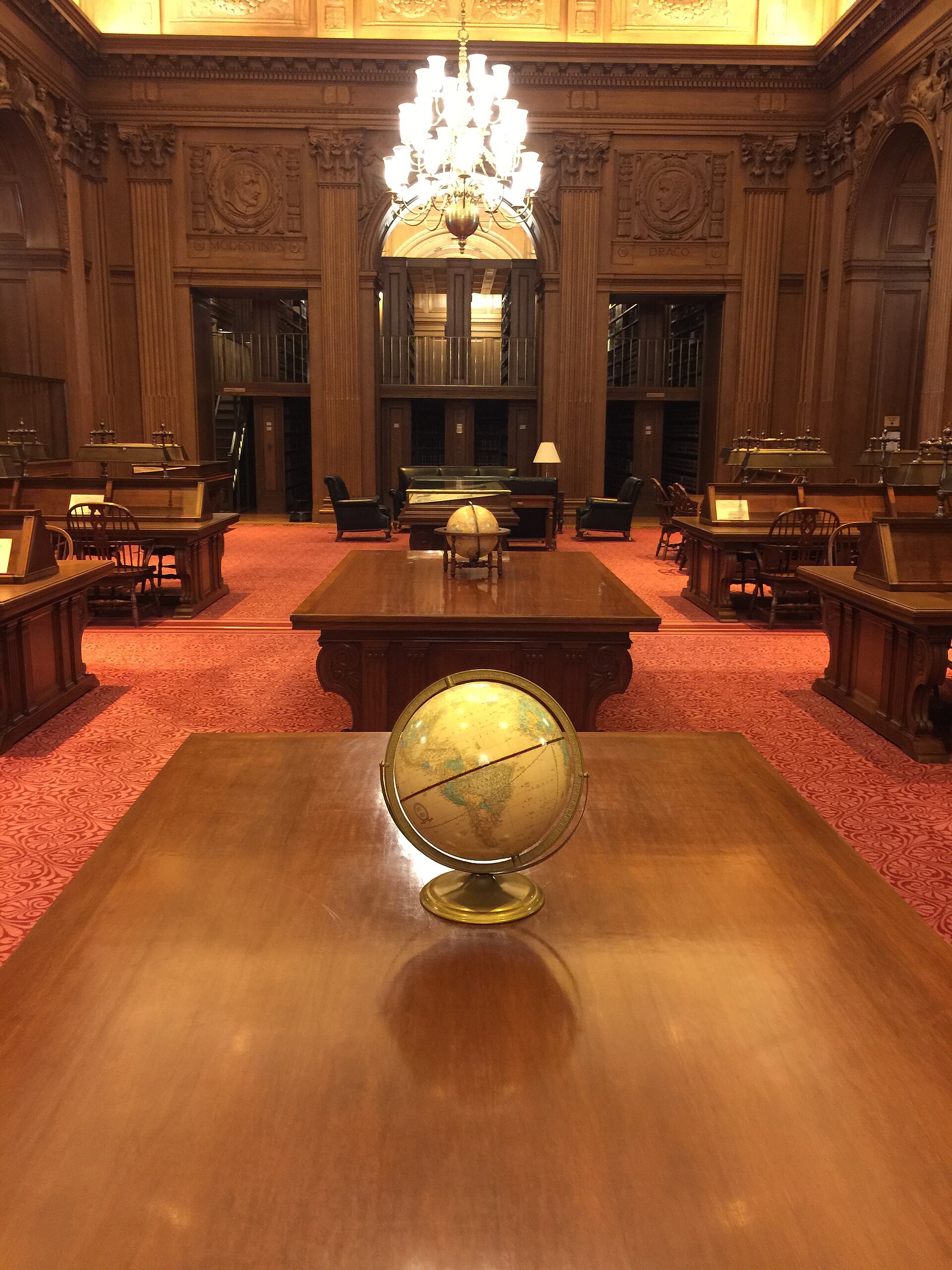
Photo: Joe Ravi · CC BY-SA 3.0 · Wikimedia Commons · All photo credits
The shrinking docket
Scroll through five moments in the Court’s caseload, 1946 to 2023. Every figure below is computed from the Supreme Court Database.
For four decades the Court worked through a caseload that would be unrecognisable today. Across the 1946–1985 terms it issued an average of 146 signed decisions a term, and in 29 of the 78 terms in this dataset it cleared 140 or more.
The peak came in October Term 1967, when the Court decided 197 cases — more than three times what it now hears in a year. Certiorari was close to obligatory in whole categories of appeals, and the Court was still absorbing the litigation wave that followed the Warren Court’s criminal-procedure and civil-rights rulings.
From the late 1980s the line falls and never recovers. Congress made the Court’s appellate jurisdiction almost entirely discretionary, the Justices took fewer cases, and the docket settled into a new normal. The 2023 term produced 59 decisions; 2022 produced 58, the smallest in this dataset.
The cases that survive the cut are harder. Bare 5–4 majorities made up 13.1% of decisions in the 1946–1985 terms and 17.6% from 2005 onward — a smaller docket weighted more heavily toward the questions that split the bench.
Across all 9,277 decisions in this dataset, 2,696 were unanimous 9–0 and 1,403 came down 5–4. The last ten terms average 68 decisions apiece. Every number on this page is recomputed from the Supreme Court Database at build time.
Refreshed daily
A daily-refreshed pool of legal news, recent opinions, and judiciary activity — an independent aggregation of public data, baked into the page at build time.
The past several terms have entrenched the court’s ongoing determination to expand presidential authority. With presidential wins over the control of administrative agencies , immunity from criminal prosecution for certain acts , freedom…
As a seminary student, Clarence Thomas worked especially hard studying Latin. According to him, excelling in the notoriously difficult subject was a way to prove his merit to those who believed, because he was Black, that he was inferior…
Plus, what Attorney General Todd Blanche said about the administration’s next moves on mail-in voting.
Four ways in
The same Supreme Court Database, approached four different ways.
Search
Every one of the 9,277 orally argued decisions from the 1946–2023 terms, filterable by term, issue area, chief-justice era, vote split, winner and direction — each with its own page.
Analyse
Caseload by term, the 5–4 rate, majority-size distribution, issue areas by decade, petitioner win rate, and decision direction — six charts over 78 terms.
Compare
Tenure, participation and voting profile for all 40 justices who have sat since 1946, with a page for each.
Understand
Plain-language explainers on 5–4 decisions, SCDB coding, issue areas, decision direction, and what petitioner and respondent mean.
Where this comes from
The core structured dataset is the Supreme Court Database (SCDB), version 2024 Release 01 — maintained by Harold J. Spaeth, Lee Epstein, and collaborators at Washington University in St. Louis. It covers all orally argued cases from the 1946 through 2023 terms. Everything on this site is derived from it, or from the public feeds credited on each live block.
SCOTUS Decisions is not a government website and is not affiliated with or endorsed by the U.S. Supreme Court, Congress, the Federal Reserve, or any agency. Photographs of federal buildings and portraits of justices are used under the licences listed on the credits page — public domain or Creative Commons, none of them a government endorsement. Every image is credited on the credits page.